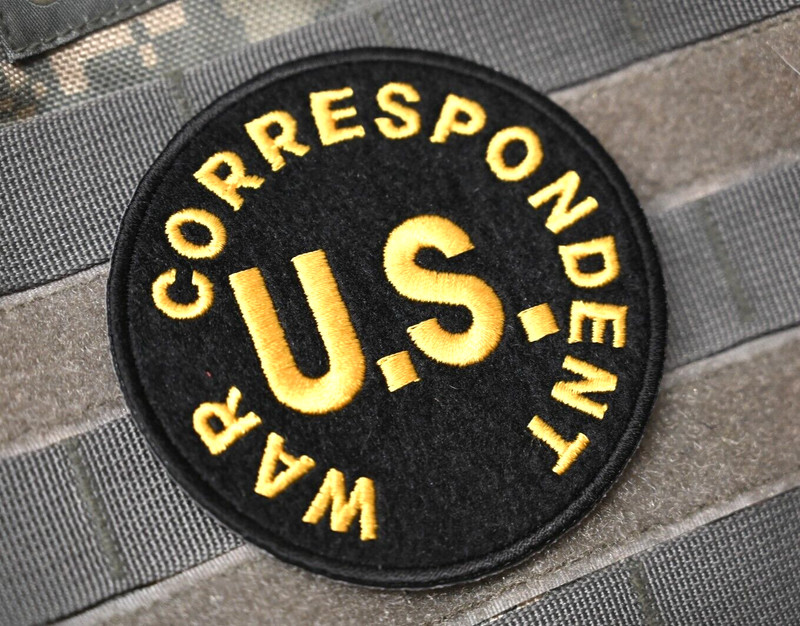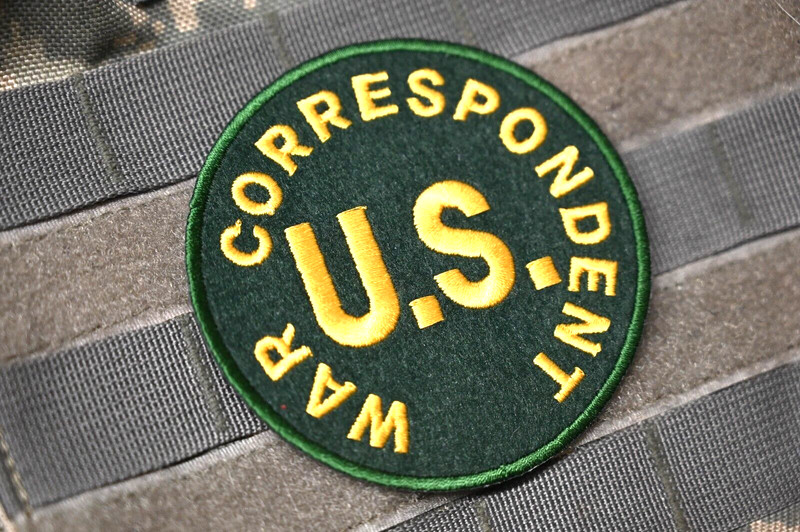



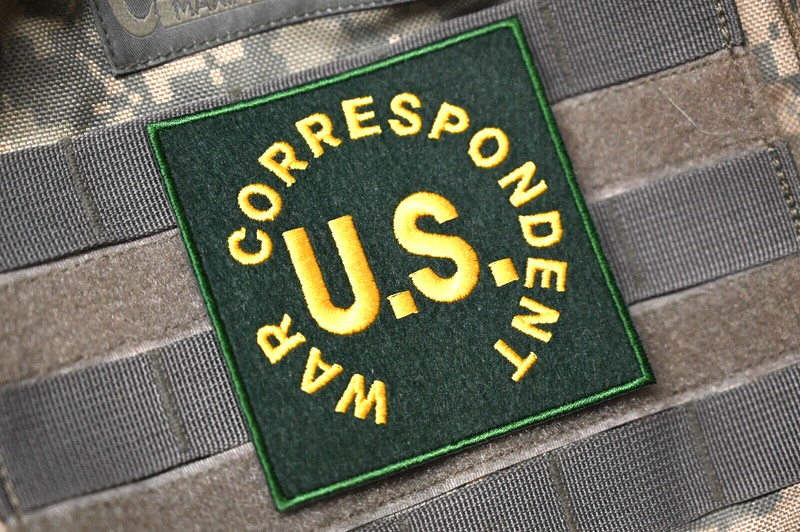


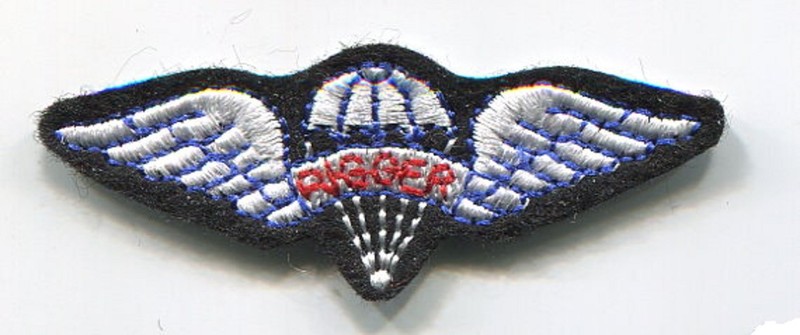

WWII US WAR CORRESPONDENT JOURNALIST iron-on/sew-on INSIGNIA PATCH (REPO)This is a reproduction WWII US WAR CORRESPONDENT JOURNALIST iron-on/sew-on INSIGNIA PATCH (REPO). You will receive the item as shown in the first photo. Please note that there are color variations due to settings on different PCs/Monitors. The color shown on your screen may not be the true color. Personal check payment is welcomed. A war correspondent is a journalist who covers stories first-hand from a war zone. War correspondence stands as one of journalism's most important and impactful forms. War correspondents operate in the most conflict-ridden parts of the world. Once there, they attempt to get close enough to the action to provide written accounts, photos, or film footage. It is often considered the most dangerous form of journalism. Modern war correspondence emerged from the news reporting of military conflicts during the French Revolution and Napoleonic Wars. Its presence grew in the middle of the nineteenth century, with American journalists covering the Mexican-American War (1846-1848) and the European newspapermen writing reports from the Crimean War (1853-1856). People have written about wars for thousands of years. Herodotus's account of the Persian Wars is similar to journalism, though he did not himself participate in the events. Thucydides, who some years later wrote a history of the Peloponnesian War was a commander and an observer to the events he described. Memoirs of soldiers became an important source of military history when that specialty developed. War correspondents, as specialized journalists, began working after the printing of news for publication became commonplace. In the eighteenth century the Baroness Frederika Charlotte Riedesel's Letters and Journals Relating to the War of the American Revolution and the Capture of the German Troops at Saratoga is regarded as the first account of war by a woman. Her description of the events that took place in the Marshall House are particularly poignant because she was in the midst of battle. The first modern war correspondent is said to be Dutch painter Willem van de Velde, who in 1653 took to sea in a small boat to observe a naval battle between the Dutch and the English, of which he made many sketches on the spot, which he later developed into one big drawing that he added to a report he wrote to the States General. A further modernization came with the development of newspapers and magazines. One of the earliest war correspondents was Henry Crabb Robinson, who covered Napoleon's campaigns in Spain and Germany for The Times of London. Another early correspondent was William Hicks whose letters describing the Battle of Trafalgar (1805) were also published in The Times. Winston Churchill in 1899, working as a correspondent, became notorious as an escaped prisoner of war. Early film newsreels and television news rarely had war correspondents. Rather, they would simply collect footage provided by other sources, often the government, and the news anchor would then add narration. This footage was often staged as cameras were large and bulky until the introduction of small, portable motion picture cameras during World War II. The situation changed dramatically with the Vietnam War when networks from around the world sent cameramen with portable cameras and correspondents. This proved damaging to the United States as the full brutality of war became a daily feature on the nightly news. News coverage gives combatants an opportunity to forward information and arguments to the media. By this means, conflict parties attempt to use the media to gain support from their constituencies and dissuade their opponents. The continued progress of technology has allowed live coverage of events via satellite up-links and the rise of twenty-four hour news channels has led to a heightened demand for material to fill the hours. Only some conflicts receive extensive worldwide coverage, however. Among recent wars, the Kosovo War, the Persian Gulf War and the Russo-Ukrainian war received a great deal of coverage. In contrast, the largest war in the last half of the 20th century, the Iran–Iraq War, received far less substantial coverage. This is typical for wars among less-developed countries, as audiences are less interested and the reports do little to increase sales and ratings. The lack of infrastructure makes reporting more difficult and expensive, and the conflicts are also far more dangerous for war correspondents. War correspondents are protected by the Geneva Conventions of 1949 and their additional protocols. In general, journalists are considered civilians so they have all rights related to the civilians in a conflict.Other items in other pictures are available from my eBay Store. They will make a great addition to your SSI Shoulder Sleeve Insignia collection. You find only US Made items here, with the same LIFETIME warranty. **eBay REQUIRES ORDER BE SENT WITH TRACKING, PLEASE SELECT USPS GROUND ADVANTAGE SERVICE w/TRACKING** **eBay REQUIRES ORDER BE SENT WITH TRACKING, PLEASE SELECT USPS GROUND ADVANTAGE SERVICE w/TRACKING** We'll cover your purchase price plus shipping.FREE 30-day No-Question return ALL US-MADE PATCHES HAVE LIFETIME WARRANTYWe do not compete price with cheap import copies.Watch out for cheap import copies with cut-throat price; We beat cheap copies with Original design, US-Made Quality and customer services.Once a customer, a LIFETIME of services
| Return Shipping Will Be Paid By | Buyer |
| All Returns Accepted | Returns Accepted |
| Item Must Be Returned Within | 30 Days |
| Type | Patch |
| Conflict | WW II (1939-45) |
| Original/Reproduction | Reproduction |
| Theme | Militaria |
| Country/Region Of Manufacture | United States |
| Region Of Origin | United States |
WWII US WAR CORRESPONDENT JOURNALIST iron-on/sew-on INSIGNIA PATCH (REPO)This is a reproduction WWII US WAR CORRESPONDENT JOURNALIST iron-on/sew-on INSIGNIA PATCH (REPO). You will receive the item as shown in the first photo. Please note that there are color variations due to settings on different PCs/Monitors. The color shown on your screen may not be the true color. Personal check payment is welcomed. A war correspondent is a journalist who covers stories first-hand from a war zone. War correspondence stands as one of journalism’s most important and impactful forms. War correspondents operate in the most conflict-ridden parts of the world. Once there, they attempt to get close enough to the action to provide written accounts, photos, or film footage. It is often considered the most dangerous form of journalism. Modern war correspondence emerged from the news reporting of military conflicts during the French Revolution and Napoleonic Wars. Its presence grew in the middle of the nineteenth century, with American journalists covering the Mexican-American War (1846-1848) and the European newspapermen writing reports from the Crimean War (1853-1856). People have written about wars for thousands of years. Herodotus’s account of the Persian Wars is similar to journalism, though he did not himself participate in the events. Thucydides, who some years later wrote a history of the Peloponnesian War was a commander and an observer to the events he described. Memoirs of soldiers became an important source of military history when that specialty developed. War correspondents, as specialized journalists, began working after the printing of news for publication became commonplace. In the eighteenth century the Baroness Frederika Charlotte Riedesel’s Letters and Journals Relating to the War of the American Revolution and the Capture of the German Troops at Saratoga is regarded as the first account of war by a woman. Her description of the events that took place in the Marshall House are particularly poignant because she was in the midst of battle. The first modern war correspondent is said to be Dutch painter Willem van de Velde, who in 1653 took to sea in a small boat to observe a naval battle between the Dutch and the English, of which he made many sketches on the spot, which he later developed into one big drawing that he added to a report he wrote to the States General. A further modernization came with the development of newspapers and magazines. One of the earliest war correspondents was Henry Crabb Robinson, who covered Napoleon’s campaigns in Spain and Germany for The Times of London. Another early correspondent was William Hicks whose letters describing the Battle of Trafalgar (1805) were also published in The Times. Winston Churchill in 1899, working as a correspondent, became notorious as an escaped prisoner of war. Early film newsreels and television news rarely had war correspondents. Rather, they would simply collect footage provided by other sources, often the government, and the news anchor would then add narration. This footage was often staged as cameras were large and bulky until the introduction of small, portable motion picture cameras during World War II. The situation changed dramatically with the Vietnam War when networks from around the world sent cameramen with portable cameras and correspondents. This proved damaging to the United States as the full brutality of war became a daily feature on the nightly news. News coverage gives combatants an opportunity to forward information and arguments to the media. By this means, conflict parties attempt to use the media to gain support from their constituencies and dissuade their opponents. The continued progress of technology has allowed live coverage of events via satellite up-links and the rise of twenty-four hour news channels has led to a heightened demand for material to fill the hours. Only some conflicts receive extensive worldwide coverage, however. Among recent wars, the Kosovo War, the Persian Gulf War and the Russo-Ukrainian war received a great deal of coverage. In contrast, the largest war in the last half of the 20th century, the Iran–Iraq War, received far less substantial coverage. This is typical for wars among less-developed countries, as audiences are less interested and the reports do little to increase sales and ratings. The lack of infrastructure makes reporting more difficult and expensive, and the conflicts are also far more dangerous for war correspondents. War correspondents are protected by the Geneva Conventions of 1949 and their additional protocols. In general, journalists are considered civilians so they have all rights related to the civilians in a conflict.Other items in other pictures are available from my eBay Store. They will make a great addition to your SSI Shoulder Sleeve Insignia collection. You find only US Made items here, with the same LIFETIME warranty. **eBay REQUIRES ORDER BE SENT WITH TRACKING, PLEASE SELECT USPS GROUND ADVANTAGE SERVICE w/TRACKING** **eBay REQUIRES ORDER BE SENT WITH TRACKING, PLEASE SELECT USPS GROUND ADVANTAGE SERVICE w/TRACKING** We’ll cover your purchase price plus shipping.FREE 30-day No-Question return ALL US-MADE PATCHES HAVE LIFETIME WARRANTYWe do not compete price with cheap import copies.Watch out for cheap import copies with cut-throat price; We beat cheap copies with Original design, US-Made Quality and customer services.Once a customer, a LIFETIME of services